WindSmart Systems Technology
WindSmart Systems
WindSmart Systems Technologically-Advanced Roof Systems
Wind represents the most destructive force affecting roofs, which is why you should invest in our quality wind vented roof. WindSmart Roof Systems use science to achieve more wind-resistant, low-slope roofs. Using a combination of innovative air sealing techniques and pressure equalizing technology (one-way equalization vents), the destructive wind uplift forces are negated. The greater the wind velocity, the more secure the field of the roof can become.
Through a process of controlled air exchange, a wind vented roof can be engineered to continually remove any entrapped moisture from new and existing roof assemblies. Ongoing moisture removal is the key strategy to roof longevity and ongoing recyclability of the roof assemblies. With a WindSmart System, the age-old problem of how to remove entrapped moisture has been solved. The system combines advanced technology with major manufacturer materials and warranties to produce durable, longer lasting and more cost-effective roofs assemblies.
WindSmart Roof Systems can achieve some of the lowest life-cycle costs in the industry. WindSmart Systems will configure such systems to meet your goals while guaranteeing long term performance. Contact us today to get started with your wind vented roof!
Wind Ballasted Roof And Wind Vented Roof Advantages
A wind ballasted roof provides exceptional stability for commercial and industrial buildings located in high-wind areas. These roofs rely on heavy weights or specially designed ballast to secure the roofing membrane, creating a strong defense against wind uplift. Professional installation ensures that the roof remains intact even during extreme weather conditions. The added ballast contributes not only to stability but also to the overall durability and long-term performance of the roof system. Investing in a ballasted roof is a practical way to protect your property while minimizing the risk of costly structural damage.
Wind vented roof systems work by allowing controlled airflow beneath the roof membrane. This constant air exchange removes trapped moisture, which can otherwise lead to rot, corrosion, and structural deterioration. Installing a vented roof can significantly extend the life of your roof while improving energy efficiency. By combining innovative design with high-quality materials, a vented roof solves problems that traditional roofs often cannot address. It promotes a healthier interior environment and reduces long-term maintenance requirements, saving building owners both time and money.
Design And Engineering Principles For Wind Ballasted Roof
Wind ballasted roof systems are engineered with precise calculations that take into account wind velocity, roof slope, and building size. Properly installed ballast ensures that the membrane stays securely in place, counteracting strong uplift forces. The design process also focuses on ensuring that the roof can withstand seasonal changes and extreme weather conditions without compromising integrity. This type of roof is particularly suitable for large, flat surfaces where traditional fastening methods may be insufficient. Investing in a ballasted roof demonstrates foresight in building protection and structural safety.
Beyond stability, ballasted roofs allow flexibility for rooftop equipment installation, including HVAC units, solar panels, and other mechanical systems. Ballast placement can be customized to maintain wind resistance while accommodating functional requirements. The combination of robust engineering and quality materials ensures that the roof maintains both performance and aesthetics over time. A well-designed wind ballasted roof represents a long-term investment in safety, resilience, and cost efficiency for any commercial or industrial building.
Moisture Control And Ventilation With Wind Vented Roof
One of the greatest advantages of a vented roof is its ability to manage moisture effectively. Trapped moisture can accelerate material degradation and create conditions for mold and mildew growth. A vented roof continuously circulates air beneath the membrane, removing excess moisture and enhancing the overall lifespan of the roofing system. Buildings with this technology experience fewer maintenance issues and improved energy efficiency. Over time, the benefits of proper ventilation translate into substantial cost savings and reduced risk of structural damage.
Cost Efficiency And Long-Term Performance Of Wind Ballasted Roof
A wind ballasted roof provides long-term value by combining ballast, durable membranes, and precision engineering. These features reduce the need for repairs and replacements, lowering life-cycle costs compared to conventional roofing systems. When installed correctly, a ballasted roof can last for decades while maintaining its resistance to high winds. The initial investment is offset by reduced maintenance, extended roof life, and predictable budget planning. Organizations that select a ballasted roof can achieve lasting performance and peace of mind regarding structural protection.
Integrating Vented Roof With Modern Building Practices
Wind vented roof systems integrate seamlessly with both new construction and retrofitting projects. They are designed to enhance moisture control, reduce wind stress, and improve overall building performance. These roofs are compatible with green building initiatives, solar panel installations, and advanced insulation solutions. Utilizing a vented roof demonstrates commitment to sustainability while protecting the building’s structural integrity. By improving energy efficiency and reducing maintenance needs, a vented roof provides long-term financial and environmental benefits for property owners.
Without WindSmart Roof System
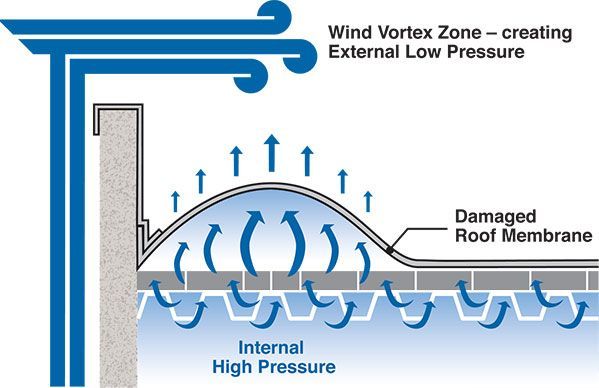
Wind currents constantly work to destroy the integrity of conventional roofs.
Wind on the side of a building creates an updraft. Where such winds collide with the horizontal wind stream, the updraft violently tumbles, creating a horizontal vortex or tornado. This wind vortex creates a low pressure “uplift” which is typically measured in pounds/square foot.
Wind uplift is most intense at corners and perimeter edges (where roofs most often fail) and less intense in the roof field. Roofs can be designed with additional enhancements (fasteners, adhesives, rocks, etc.) to resist such uplift forces or roofs can be pressure equalized through a WindSmart system.
Pressure equalization in a wind ballasted roof provides a myriad of benefits to the building owner which are not possible through a traditional roof assembly.
With WindSmart Roof System
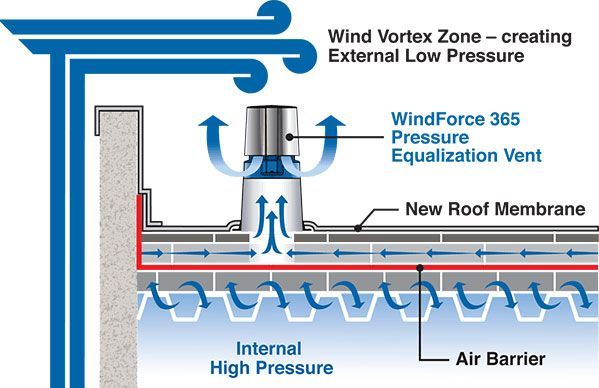
WindSmart System roofs use wind currents to “vacuum-pack” the entire roof and underlying structure to provide positive benefits from wind uplift.
WindSmart Systems equalize pressure at the corners and perimeter, then transfer this low pressure into the roof assembly and to the field of the roof. Such wind generated vacuum will vaporize and expel entrapped moisture up and through strategically placed equalization vents.
In doing so, the field of the roof achieves enhanced wind resistance greater than the wind uplift forces pulling the roof assembly tight against the air barrier substrate. This method of constructing superior wind ballasted roofs has been well documented through independent laboratory tests by multiple organizations.
WindSmart has a proven track record of successfully applying such systems to hundreds of commercial, industrial and institutional type buildings. The WindSmart System utilizes simple science, it works and we guarantee its performance on your building.
FAQs
What exactly is a WindSmart roof system?
A WindSmart wind ballasted roof system is an air-sealed, pressure-equalized roofing assembly for commercial or industrial buildings that uses wind forces to produce a secure, high-performing low-slope roof. Rather than fighting wind uplift, the system is designed so that wind passing over the roof membrane actually "vacuum-packs" the membrane to the substrate, creating superior stability.
In addition to resisting wind uplift, the WindSmart system promotes controlled air exchange that continually removes any entrapped moisture from both new and existing roof assemblies, helping ensure long-term integrity, better thermal performance, and recyclability of insulation materials.
How does the system use wind to protect the roof?
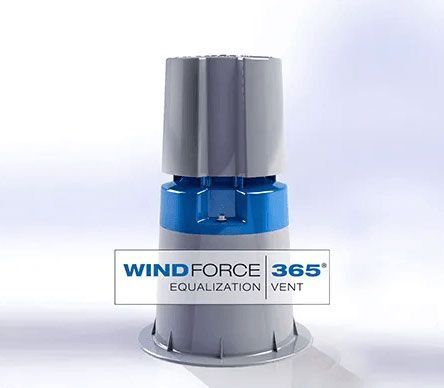
When wind flows across the roof, it generates a low-pressure zone that would normally create uplift on a conventional roof, especially at corners and edges. In a WindSmart roof, one-way equalization vents (such as the patented WindForce 365 vents) allow that pressure to equalize, transferring the low pressure beneath the membrane and creating suction.
This suction effectively "vacuum-packs" the membrane against the air barrier substrate, which makes the roof more resistant. The stronger the wind, the more secure the roof becomes.
Can WindSmart roofs help with moisture problems inside roof assemblies?
Yes. The controlled air exchange designed into the WindSmart system continuously removes entrapped moisture from roof assemblies - including from insulation and underlying layers. This helps prevent future moisture-related deterioration, preserves thermal performance, and can extend the lifespan of the roof.
Moreover, because the wind ballasted roof keeps the assembly dry and the materials intact, it supports the recyclability of insulation and other materials, reducing waste that would otherwise result from tear-offs.
What kind of buildings is a WindSmart roof suitable for?
WindSmart roof systems are well-suited for large commercial, industrial, and institutional low-slope roofs. Because the system can provide high wind resistance, moisture removal, and cost-effective installation, it's ideal for buildings where weather exposure, maintenance costs, and long-term durability matter.
They are also a smart choice for existing buildings that need recovery rather than a full tear-off: since the system minimizes fastening and adhesive requirements, it works especially well on decks that are difficult to fasten to (concrete, gypsum, tectum, etc.).
How does WindSmart compare to traditional ballasted or mechanically-fastened roofs?
Traditional ballasted roofs rely on weight (ballast like rock, pavers, or gravel) to hold a membrane down, and mechanically-fastened roofs use nails or adhesives - both approaches remain vulnerable to wind uplift and suffer potential moisture trapping beneath the membrane.
By contrast, a WindSmart wind ballasted roof doesn't rely solely on weight or adhesives. Instead it uses pressure equalization and vacuum effect to secure the membrane. This results in greater wind resistance and often lower life-cycle costs than conventional ballasted or fastened systems.
What kind of wind uplift resistance can WindSmart deliver?
With the WindForce 365 Equalization Vent system, a properly installed WindSmart wind ballasted roof has demonstrated resistance to substantial wind uplift pressures. For example, on concrete decks the vent is rated up to 495 pounds per square foot (psf); on metal decks up to 285 psf; and on wood decks up to 210 psf.
This high uplift resistance helps ensure that even under severe wind conditions, the roof membrane remains secure - making the system one of the most robust commercially available wind-resistant roof assemblies.
Will installing a WindSmart roof save money over time?
Yes. Because WindSmart roofs reduce the need for frequent repairs, minimize the risk of wind or moisture damage, and avoid wasteful tear-offs (thanks to recyclability), they tend to offer among the lowest life-cycle costs of any commercial roof system on the market.